What Is Algorithmic Trading — And Why Should Every Indian Trader Backtest First?
What Is Algorithmic Trading?
Algorithmic trading — also called algo trading or automated trading — is the practice of using computer programs to execute buy and sell orders in financial markets based on pre-defined rules. Instead of sitting in front of a screen and clicking "buy" when you spot a pattern, an algorithm does it for you — faster, without emotion, and without missing a signal.
In India, algo trading now accounts for a significant portion of daily exchange volume on NSE and BSE. What was once restricted to institutional desks and large proprietary trading firms is now accessible to individual traders and SEBI-registered analysts through retail broker APIs offered by Zerodha, Upstox, Angel One, and others.
How Does Algorithmic Trading Work?
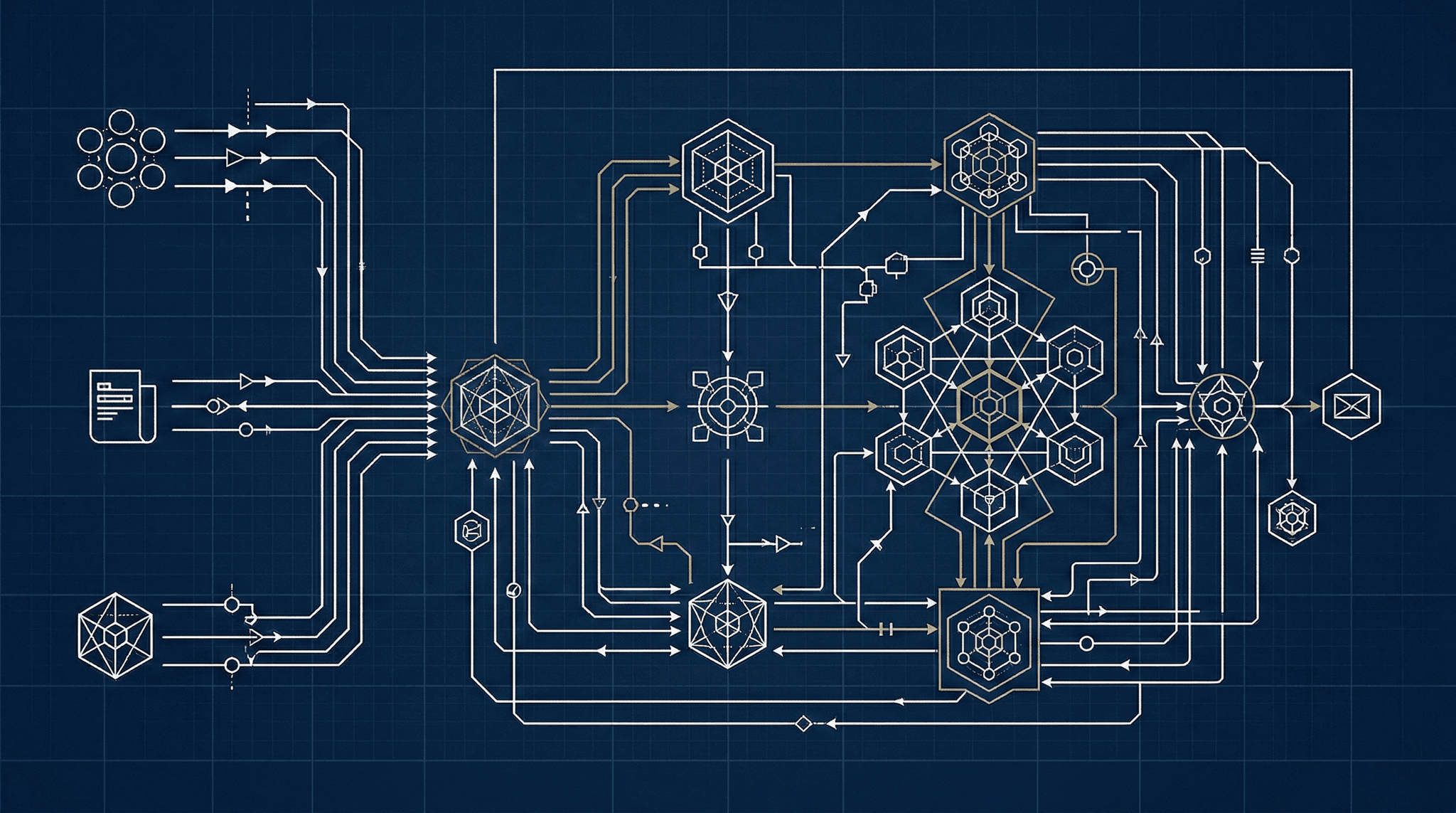
At its core, an algo trading system has four components:
1. Signal Generation
The algorithm scans the market based on your rules — technical indicators (RSI, moving averages, Bollinger Bands), price patterns, options Greeks, or even news sentiment — and generates a buy or sell signal.
2. Order Execution
When a signal is generated, the algo automatically places an order through your broker's API. This happens in milliseconds — far faster than any human could react.
3. Risk Management
Built-in rules manage position size, stop-losses, daily loss limits, and exposure caps. The algo enforces discipline that humans often abandon under pressure.
4. Monitoring & Reporting
The system logs every trade, tracks P&L in real-time, and sends alerts. You see exactly what happened and when.
Why Backtesting Is the Most Important Step
Here's where most traders make a critical mistake: they build or buy an algorithm and deploy it live immediately — without ever testing it on historical data.
Backtesting means running your strategy on past market data to simulate how it would have performed. It answers the question: "If I had used this exact strategy over the last 3 years, what would my P&L, drawdown, and win rate have been?"
This is not optional. It is the difference between informed deployment and gambling.
What Backtesting Reveals
A well-constructed backtest on a platform like TradeMade will show you:
- Net P&L after real costs — not just gross profits, but after brokerage, STT, GST, slippage, and impact costs. Many strategies that look profitable gross are losers net-of-costs.
- Maximum drawdown — the largest peak-to-trough loss your strategy experienced. This tells you if you'd have the psychological fortitude (and capital) to survive the worst period.
- Win rate and profit factor — how often your strategy wins, and the ratio of average win to average loss.
- Sharpe ratio — risk-adjusted return. A strategy with consistent moderate gains is often more valuable than one with huge wins and huge losses.
- Behaviour in different market regimes — does your strategy only work in trending markets? Does it collapse during high-volatility events like COVID or budget announcements?
Why "Realistic" Backtesting Matters — The Slippage Problem
The #1 reason backtests lie is slippage. Slippage is the difference between the price you expected and the price you actually got.
On a free backtesting tool, your strategy buys Nifty futures at exactly the close price of a 1-minute candle. In reality, your limit order might not get filled at all — or you get filled at 3–8 points worse than expected. Across hundreds of trades per month, this destroys P&L.
Realistic backtesting models this by:
• Using tick-level data (not just OHLC candles)
• Applying slippage based on your order size vs. typical volume at that time
• Modelling partial fills on less liquid instruments
• Including all regulatory charges (STT, SEBI charges, exchange charges, GST)
This is why professional traders using best backtesting software India prefer platforms like TradeMade over free tools — the difference in final P&L estimates can be 20–40% for active strategies.
Common Backtesting Mistakes Indian Traders Make
Mistake 1: Overfitting (Curve Fitting)
Optimising your strategy parameters on historical data until it "works perfectly" on the past. This strategy almost never works on new, unseen data. Solution: Walk-forward testing.
Mistake 2: Survivorship Bias
Testing on a stock universe that only includes companies still listed today. This ignores all the companies that went bust — which artificially inflates returns. Solution: Use survivorship-bias-free data.
Mistake 3: Look-Ahead Bias
Using data in your rules that wasn't available at the time of the trade (e.g., using a daily close price in an intraday signal). Solution: Strict event-time data access.
Mistake 4: Ignoring Transaction Costs
Always include real brokerage, STT, and slippage. Test with the exact brokerage plan you use.
Backtesting vs. Paper Trading vs. Live Trading
| Feature | Backtesting | Paper Trading | Live Trading |
|---|---|---|---|
| Uses real past data | ✅ | ❌ | ✅ |
| Real money at risk | ❌ | ❌ | ✅ |
| Tests execution logic | ❌ | ✅ | ✅ |
| Tests strategy logic | ✅ | ✅ | ✅ |
| Speed | Fast (historical) | Real-time | Real-time |
| Purpose | Validate strategy | Validate live execution | Generate returns |
The ideal sequence: Backtest → Optimise → Paper Trade → Go Live.
The Rise of Custom Algo Development in India
The good news for Indian traders is that custom algo development has become significantly more accessible. Platforms like TradeMade let you describe your strategy in plain English and have it professionally coded, tested, and deployed to your broker in days — not months.
This has opened algorithmic trading to traders who have deep market knowledge but no coding background. A seasoned equity trader who understands momentum, mean reversion, or options premium dynamics can now deploy that knowledge as a systematic strategy without writing a single line of Python.
Ready to test your edge?
Stop risking real capital on untested theories. Start a free backtest today on India's most realistic engine.
Run Your First Backtest →